TrustChain360

SUPPLIER RISK INTELLIGENCE

Lower purchase price.
Higher real cost.

Identify risks in supplier relationships, understand their business impact and act with purpose.

TrustChain360 brings signals from procurement, quality, supply chain, production and engineering into a shared view of supplier risk.

Currently in validation

INITIAL SCENARIO / COST PER UNIT

Two prices. Two perspectives.
SupplierPurchase priceIncluding additional costs
A Europe€11.20€11.77
B China€10.00€12.54
Illustrative starting scenario. Location alone does not determine quality; the assumed costs and effort are what matter.
Explore the assumptions and comparison

01 / DISTRIBUTED SIGNALS

One supplier.
Different realities.

Each perspective can be accurate in its own right. Yet the overall picture may still be missing.

A SHARED POINT OF REFERENCEOne supplier relationshipFive functions. Different experiences.
Procurement
Price and commercial terms look right.
Quality
Quality complaints are increasing.
Supply Chain / Logistics
Delivery dates are becoming less reliable.
Production
Additional operational effort is needed.
Development
Collaboration and change requests are becoming harder.
A SHARED VIEW OF RISKWhat do these signals mean together?Identify contradictions. Examine the context. Make open questions visible.
Illustrative functional perspectives, not customer data or additional calculation dimensions.

Supplier risk rarely appears in a single KPI.

Procurement, quality, logistics, production and engineering see different parts of the same supplier relationship.

A scorecard can summarize performance. Whether it becomes a business risk also depends on dependencies, consequences and changes over time.

When do these individual signals become a real business risk?

02 / BUSINESS IMPACT

The unit price was lower.
The cost of the relationship was not.

A lower purchase price does not mean a lower-cost supplier relationship.

Coordination, logistics, quality issues and operational effort can consume the price advantage. Looking at them together reveals which differences matter to the business.

The starting scenario compares the same annual quantity of the same component. Change the assumptions and explore when the decision shifts.

A cost example, not a risk score. Measured costs, estimated consequences and modelled Risk Exposure must remain distinct.

Understand the business context
What does your supplier really cost?Illustrative scenario
Same component · same demand

Purchase price: B costs €1.20 less per unit.

SUPPLIER A / Europe

+€0.57 additional cost / unit

Effective cost per unit in this example€11.77
Annual cost in this example€141,240
View cost breakdown
Purchase price
€11.20
Coordination
+€0.18
Delivery / logistics
+€0.11
Quality-related costs
+€0.16
Other operational effort
+€0.12

SUPPLIER B / China

+€2.54 additional cost / unit

Effective cost per unit in this example€12.54
Annual cost in this example€150,480
View cost breakdown
Purchase price
€10.00
Coordination
+€1.27
Delivery / logistics
+€0.42
Quality-related costs
+€0.37
Other operational effort
+€0.48
Annual cost difference A − B−€9,240€9,240 cost advantage for Supplier A in this example€0.77 lower cost / unit × 12,000 units / year

Largest difference in additional cost: Coordination · B +€1.09 / unit compared with A.

When does the decision change?

B has a purchase price advantage of €1.20 / unit. It disappears when B generates €1.20 more additional cost than A. Currently: €1.97 more / unit.

Both suppliers use the same illustrative effort scale. Low, Medium and High combine coordination, logistics, quality and operational effort. All amounts are per unit; there are no volume discounts or fixed costs.

Price: €0–10,000 · Quantity: 1–1,000,000

Illustrative scenario, not a product calculation or savings guarantee. Location alone does not determine quality. Performance, dependency and the actual effort involved in the supplier relationship matter.

03 / OUR APPROACH

From risk signal
to action.

A clear decision process — from observation to reassessment.

  1. 01

    Risk Signals

    Identify signals

    Bring observations from different teams together.
  2. 02

    Risk Assessment

    Assess the risk

    Review dependency, criticality and trends.
  3. 03

    Business Impact

    Understand business impact

    Distinguish consequences, assumptions and evidence.
  4. 04

    Prioritisation

    Prioritize

    Explain which actions matter most in the business context.
  5. 05

    Action

    Manage actions

    Agree ownership, a due date and the target outcome.
  6. 06

    Reassessment

    Reassess

    Review implementation and what has actually changed.

This is the approach we are validating. It is not a promise of automatic risk detection or guaranteed risk reduction.

People discussing work at a laptop among technical test equipment.
Illustrative photograph of technical collaboration · © ThisIsEngineering / Pexels. Not a customer photograph.

04 / CROSS-FUNCTIONAL INTELLIGENCE

The same supplier relationship.
Different perspectives.

Each function contributes signals to a shared view of risk.

Procurement, quality, supply chain, production and engineering experience the same supplier relationship differently. TrustChain360 structures these perspectives into a shared basis for decisions.

Which signals are missing? Where do observations conflict? What already works well? These questions matter as much as the assessment itself.

Explore cross-functional evaluation

SEE SUPPLIERS IN CONTEXT

One portfolio.
Many dependencies.

Individual signals become meaningful when seen together.

A critical component. No alternative. Several affected teams. The same delivery deviation can have very different consequences.

TrustChain360 puts the assessment in this context.

From signal to priority →
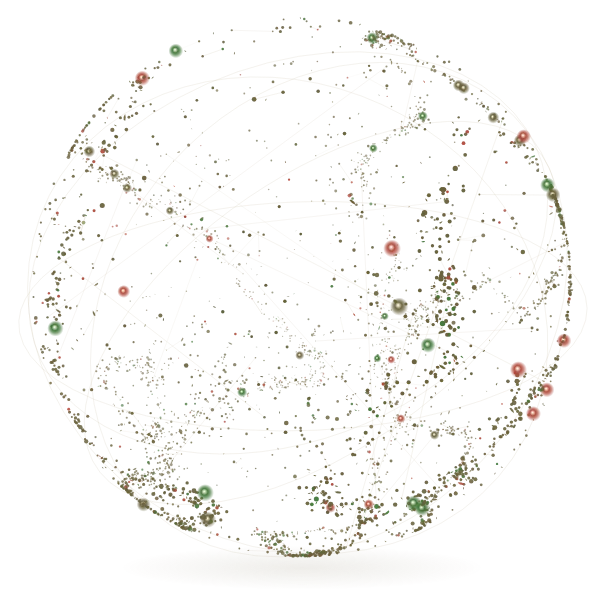
Conceptual supplier network of particles and connections
Suppliers · signals · dependencies
Conceptual visualization · Colors, sizes and impulses do not indicate real supplier status

05 / CONTEXT BEYOND PERFORMANCE

Performance is
not the same as risk.

PerformanceCriticalityBusiness Impact

Average supplier performance does not automatically mean material risk. What matters is the dependency behind it and the consequences a deviation could have.

Single Source or available alternatives. Supply criticality, strategic importance and material type. Replacement lead time, business consequences and trends.

THE SAME PERFORMANCE

Alternatives available.

Limited dependency. A deviation may be manageable.

A DIFFERENT CONTEXT

No short-term alternative.

Production-critical material and a long replacement lead time can make the same deviation more urgent.

Conceptual comparison. Context warrants investigation; it does not automatically establish a financial loss.


Distinguish performance, criticality and Business Impact

06 / ACTION & REASSESSMENT

Identifying a risk factor
is not yet an improvement.

What matters is what happens next — and what the evidence supports.

ILLUSTRATIVE CASE / UNRELIABLE DELIVERY DATES

Risk & priority
Supply of a critical component is at risk. Agree on the need for action.
Ownership & action
Procurement and planning agree a reliable delivery schedule with the supplier.
Due date & target outcome
Implement before the next assessment period, aiming for fewer unplanned delivery deviations.
Reassessment
Review delivery data, effort and implementation again. Has the risk actually decreased?

Risk Reduction needs evidence. A better score alone proves neither the effect of an action nor realized savings.

Explore actions and reassessment
SUPPLIER PERFORMANCE TIMELINE

Go beyond assessment.
Understand progress.

Example data

Supplier B · four assessment periods

82746066 Q1Q2Q3Q4
Q3 → Action agreedStabilize the delivery schedule. Review progress and implementation together in Q4.
Timeline values and interpretation
Example supplier score history
PeriodScore / 100Change from previous period
Q182–
Q274−8
Q360−14
Q466+6

The increase alone does not prove the action's impact. Assessment scope, implementation and other influencing factors must also be reviewed.

07 / VALIDATE WITH US

Supplier Reality Check

Together, we examine a real critical supplier from several perspectives.

A hands-on validation approach, not a fully standardized software product.

One supplier. One focused conversation.

  1. Choose a real supplier.
  2. Spend 30–45 minutes with procurement.
  3. Involve one or two other functions where possible.
  4. Use existing data and metrics.
  5. Develop a shared view of risk.

WHAT WE WORK THROUGH TOGETHER

  • Functional perspectives and critical signals
  • Contradictions and missing information
  • Business consequences and assumptions
  • Open risks and priority areas for action

The depth and outcome depend on the specific case and the information available.

Discuss a Supplier Reality Check

Email Florian Herding. A specific supplier case is enough to start.

STATUS / VALIDATION

Testing the need.
With people in practice.

TrustChain360 is currently in validation.

Together with specialists and leaders in procurement, supply chain, quality and operations, we are exploring how companies identify, assess and manage supplier risks — and where existing processes and systems already work well.

We do not assume every company faces the same gap. We want to understand where a shared view of risk is missing and where existing solutions are sufficient.

MISSION

Distributed knowledge.
Meaningful insight.

TrustChain360 turns distributed operational signals and experience across supplier relationships into transparent, comparable and economically meaningful insight.

VISION

Understand critical relationships.
Act earlier.

A world where critical supplier relationships are transparent, understood and actively managed before operational issues become business risks.

Existing package model — for context

TrustChain360 is in validation. The existing package model is a planning baseline, not a price quote for the Supplier Reality Check.

The packages describe the intended scope of functionality. Implementation and activation are confirmed in your individual offer.

All prices are net per month. Supplier and user scope, implementation, billing and contract term are agreed in your individual offer.

View the planned packages and scope

START WITH YOUR CASE

When does a supplier problem become a material business risk for your company?

Let's look at a real supplier case together.